How to Use a Gunna Type Beat in 2026 and What "Professional" Offers
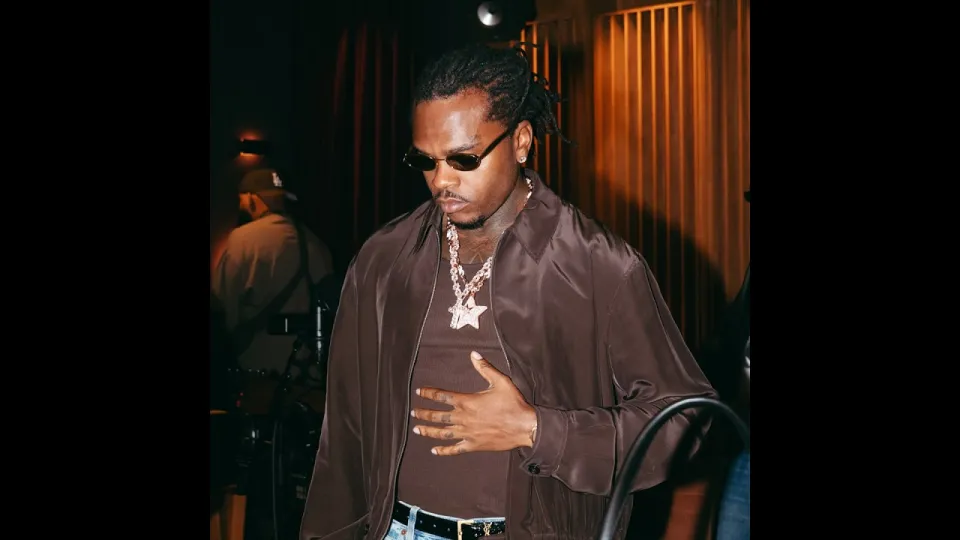
Video: [FREE] Gunna Type Beat - "Professional"
Want articles like this for your own video to promote it on YouTube and Google? Order them through the Telegram bot @sat_sit_bot. Articles with your video embedded are written and posted by the bot itself — on popular topical sites (no ads). Free trial — 50 articles.
· based on the channel MIG
Key takeaways
- "Professional" by MIG is a free Gunna type beat at 122 BPM in F# minor.
- The free download is for non-profit use only and cannot be uploaded to Spotify or Apple Music.
- An untagged license is sold via the BeatStars link in the video description.
- Adding three beats to the cart activates a discount on the producer's store.
- The beat leans on orchestral-style melody, sliding 808s and dense hi-hat rolls.
A Gunna type beat is an instrumental built to match the sound Gunna raps over — spacious, melodic trap with sliding 808s, soft minor-key melodies and busy hi-hat patterns — and the free "Professional" beat by producer MIG is a direct example, sitting at 122 BPM in F# minor. You can stream it on YouTube and buy the untagged version through the BeatStars checkout link, while the free download stays limited to non-profit use. The track was published on the MIG channel on 18 October 2026 and is tagged for the Gunna, Young Thug and One of Wun / The Last Wun lane.
What a Gunna type beat actually is and where "Professional" fits
A type beat is a instrumental written in the style of a specific artist so that rappers, songwriters and other producers can record over it without clearing a major-label instrumental. In the Gunna lane the reference points are consistent: mid-tempo trap around 120–125 BPM, minor keys, guitar or string loops with heavy reverb, 808 slides that carry the bassline, and hi-hat rolls that fill the space between vocal phrases. "Professional" checks each of those boxes — 122 BPM, F# minor, an orchestral-sounding melody line and drums that listeners in the comments described as crisp, with slides they called "disgusting" and hi-hat rolls they flagged as the standout element.
What separates a Gunna type beat from generic trap is space. Gunna's delivery is half-sung and sits slightly behind the beat, so the instrumental has to leave room in the midrange for a voice. Beats that stack too many counter-melodies force the rapper to shout; beats like this one keep the low end moving and the top end rhythmic so the vocal can float.
How the free "Professional" beat is licensed
The free version of "Professional" is available for non-profit purposes only, and the producer states plainly that it cannot be distributed to streaming services such as Spotify or Apple Music. That means the free file is fine for practice, demos, freestyle videos, SoundCloud uploads that earn nothing, or writing sessions — but the moment money or a commercial release enters the picture, you need the paid license.
- Download the free tagged beat from the video or the producer's page for writing and non-profit demos.
- Use the untagged purchase link when you plan to release on DSPs or monetize a video.
- Add three beats to the cart on that store to activate the discount the description mentions.
- Keep the license file with your project files — distributors ask for proof when a track starts earning.
Reading the beat sheet: 122 BPM in F# minor
Tempo and key are the two numbers that decide how you write to a beat, and "Professional" gives them directly: 122 BPM and F# minor. At 122 BPM a trap beat sits in the comfortable pocket between Atlanta-style 130s and slower melodic records; it lets a rapper use double-time flows on the hats without the track feeling frantic, and it leaves the 808 slides room to breathe across a bar.
F# minor is a guitar-friendly key, which is part of why this beat reads as a Gunna guitar type beat even when the lead sound is closer to strings. Practically, that means:
- Vocal takes sit well between roughly F#3 and F#4 for a male voice; harmonize a fourth above for the Gunna-style ad-libs.
- Guitar or piano loops you add should stay in F# minor (F#, G#, A, B, C#, D, E) to avoid clashing with the melody.
- The 808 pattern moves in slides, so keep your kick placement simple and let the bass carry the rhythm.
How to write and record over this type of beat
Writing to a Gunna type beat works best when you treat the melody as a call and your vocal as the answer. Listen through twice without writing: the first pass to catch the drum pattern, the second to find where the melody opens up. Then build the verse around short phrases that land on the hi-hat rolls rather than fighting them.
A workable session order for a 122 BPM beat like this one:
- Loop the eight-bar verse section and hum a flow before writing any words — Gunna's style is flow-first.
- Draft 8–12 bars with one repeated hook phrase, then vary the last two bars of each four-bar block.
- Record a scratch take, then a double, then a quiet third layer an octave down for weight.
- Track ad-libs separately and pan them wide; the beat's midrange is open enough to hold them.
- Mix the vocal so the 808 and the vocal fundamental do not compete — a gentle cut around 80–100 Hz on the voice usually clears it.
Common questions producers and rappers ask about free type beats
Most confusion around free Gunna type beats comes down to three things: what "free" actually covers, whether a type beat can be released commercially, and how to tell a good instrumental from a generic one. On the first point, the license text in the description is the contract — for "Professional" that means non-profit only, no Spotify or Apple Music. On the second, a type beat is an original instrumental in an artist's style, not a sample of that artist, so it can be licensed and released; what you cannot do is market your song as a Gunna song or use his name as the primary artist.
On quality, listeners tend to judge these beats on the details: the crispness of the drums, whether the 808 slides feel intentional, whether the melody has darkness without becoming muddy, and whether the hats roll in a way that suggests a flow. The comments on "Professional" focus on exactly those markers — the slide movement, the orchestral tone of the melody, the hat rolls — plus the instinct that the beat would suit a street anthem or a spin record. If a beat makes you hear a flow before you write a word, it is doing its job.
Where the MIG catalog and the purchase link lead
The main link in the video description goes straight to the producer's BeatStars store, where the untagged file of "Professional" is sold and where a three-beat cart activates a discount. Producer MIG publishes under the handle @prod_mig and takes licensing questions by email at migbeats.prod@gmail.com, which is the right channel for split sheets, exclusivity requests or custom work. If you record something over the free version and it starts to grow, upgrade to the untagged license before you upload it anywhere that pays.
Final thoughts on picking a Gunna type beat
"Professional" is a clean reference point for what the Gunna type beat market sounds like right now: 122 BPM, F# minor, orchestral-leaning melody, sliding bass and hats that invite double-time flows. The free file is a writing tool, not a release license, so plan the upgrade before you plan the rollout. Producer MIG built this breakdown around a beat that gives a vocalist room, which is the single most important quality in this lane. Start with the free version, write three verses, and if the record holds up, buy the untagged file through https://bsta.rs/lKzH8q and add two more beats to trigger the cart discount.
Questions & answers
Can I put a free Gunna type beat on Spotify?
Not with the free download of "Professional". The producer's terms limit the free version to non-profit use and explicitly exclude streaming services such as Spotify and Apple Music. To release on DSPs you need the untagged paid license from the BeatStars link in the description.
What BPM and key is the "Professional" Gunna type beat?
The beat is 122 BPM in F# minor. That tempo sits in the standard melodic trap range and lets a rapper switch between laid-back and double-time flows, while F# minor suits guitar and string loops.
Is a type beat the same as stealing an artist's instrumental?
No. A type beat is an original instrumental made in the style of an artist such as Gunna, not a copy of one of his songs. You license it from the producer, but you cannot advertise your track as a Gunna song or list him as the main artist.
How do I get the discount on the untagged beat?
Add three beats to the cart on the producer's BeatStars store and the discount activates automatically at checkout. The direct link to the "Professional" page is https://bsta.rs/lKzH8q, and licensing questions go to migbeats.prod@gmail.com.
Source: [FREE] Gunna Type Beat - "Professional" · Markdown version